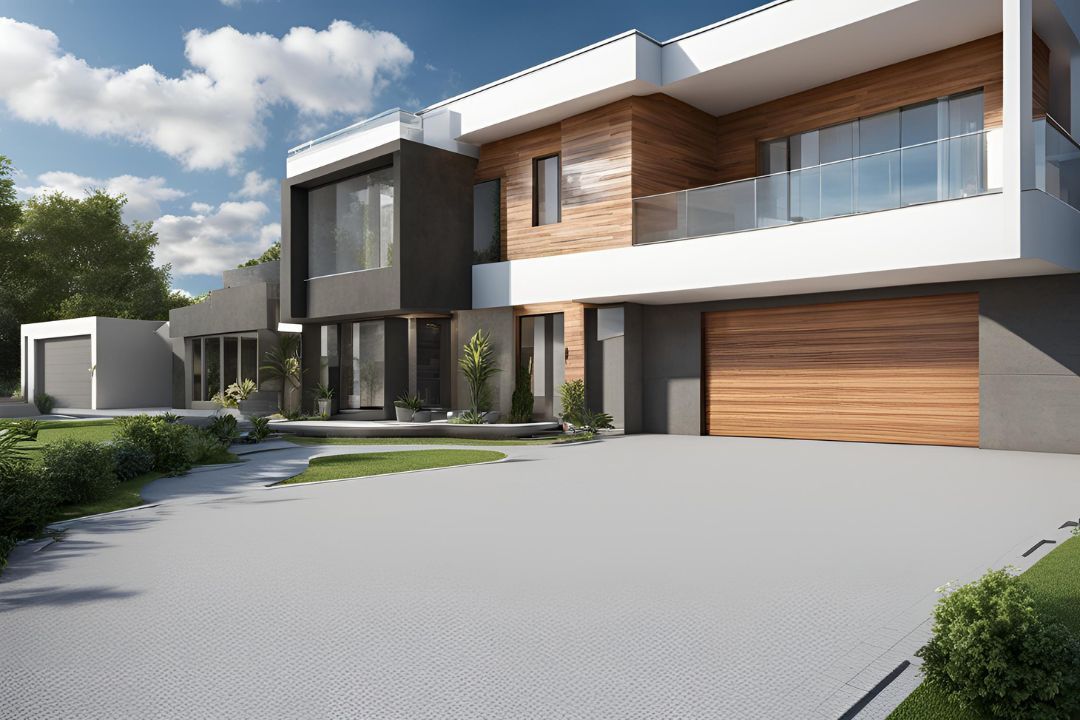
Best Paver Colors for Florida Heat: Which Stay Coolest Underfoot in Jacksonville Sun
Paver color in Northeast Florida isn't a cosmetic decision — it's a comfort and safety decision. On a cloudless July afternoon in Jacksonville, a charcoal or black concrete paver next to your pool can register 140-160°F at the surface, hot enough to blister bare feet in under a minute. Choosing the coolest paver colors Florida homeowners can install starts with understanding solar reflectance, then translating that into specific brand color names that actually stock at local yards. This guide walks through the physics, the ranked color categories, the exact Tremron and Belgard SKUs to ask for, and where you can safely go darker without frying anyone's feet.
The Physics: SRI, Albedo, and Why Paver Color Equals Surface Temperature
Every hardscape surface has a Solar Reflective Index, or SRI, that measures how much sunlight it reflects and how quickly it releases absorbed heat. The scale runs from 0 (a standard black surface that gets scorching in sun) to about 100 (a bright white surface that stays close to ambient air temp). SRI is defined by ASTM E1980 and is the number you want to see on a paver spec sheet before you commit to a color for a barefoot area.
The rule of thumb the industry uses: SRI 29 or higher is recommended for horizontal surfaces around pools, patios, and any area where people walk barefoot. That's the same threshold LEED uses for heat-island credit on hardscapes. Below SRI 29 and you're building a heat sink. Below SRI 15 and you're building something that will hurt bare skin at midday from May through September in Jacksonville.
What albedo actually means for foot temperature
Albedo is the raw reflectance number — the fraction of solar energy bouncing off the surface. A cream-colored paver might have an albedo of 0.55, meaning 55% of the sun's energy reflects back into the sky rather than heating the paver. A charcoal paver might sit at 0.05 — only 5% reflected, 95% absorbed and turned into heat you feel through your shoes.
The paver surface temperature difference between those two extremes at 2 p.m. on a Jacksonville July day is routinely 40-60°F. Field measurements around Duval and St. Johns counties consistently show buff and sand-colored pavers holding at 105-115°F while dark charcoal pavers in the same yard, same sun, same install date hit 145-160°F. That's not a rounding error — that's the difference between "warm on the feet" and "second-degree burn on a toddler."
Why concrete pavers behave differently than natural stone
Concrete pavers get their color from integral pigment mixed through the whole unit, plus a face-mix top layer for premium lines. Natural travertine and shellstone reflect heat because of both color and the porous mineral structure — the tiny pockets create air gaps that limit heat conduction into your foot. A cream-colored concrete paver reflects almost as well as travertine but conducts a little more heat because it's denser. Practically speaking, for Jacksonville pool decks the top-tier options are travertine, shell blend, or a very light concrete paver in cream/sand.
Coolest Color Categories Ranked From Best to Worst
Here's the ranked ladder Northeast Florida installers work from when a homeowner says "I want cool underfoot but I also want it to look good."
1. Buff, cream, sand, and ivory (SRI 45-60) — the coolest concrete options
These are the true "cool touch" colors. Think French vanilla, buff blend, ivory, tan-cream. Under Jacksonville midday sun they typically hold 100-115°F — warm but walkable barefoot. Almost every Florida pool builder defaults to this family for a reason: the heat math works and the look is bright, coastal, and hides pool-splash mineral staining.
2. Whites and very light greys (SRI 40-55)
Pure whites reflect the most heat but they show every leaf stain and mildew streak, so they're usually blended with a hint of grey or cream in the paver mix. A white-blend paver runs 105-120°F in peak sun. Beautiful on modern pool decks; requires more cleaning.
3. Travertine and limestone tones (SRI 35-50)
Natural travertine pavers and concrete pavers that mimic travertine (Ivory, Walnut travertine blends) fall here. The mineral texture helps as much as the color. Surface temps land in the 105-125°F band. Best all-around choice for barefoot pool decks in Jacksonville if the budget allows real travertine.
4. Terracotta, warm reds, sandstone reds (SRI 25-35)
Red-toned pavers sit right at the edge of the LEED comfort threshold. In direct sun they'll run 115-130°F — walkable in flip-flops, borderline for extended bare feet. Fine for patios that see some afternoon shade or that get cooled by a covered lanai.
5. Medium greys and taupes (SRI 20-30)
The most common driveway and walkway color in Jacksonville. Surface temp: 120-135°F midday. Not something you want to stand on barefoot in July, but perfectly fine for driveways, side yards, and shoe-on walkways.
6. Browns, chocolate blends (SRI 12-22)
Chocolate, mocha, and coffee-toned pavers look gorgeous on rustic-style patios but they hit 130-145°F in peak sun. Reserve for shaded areas or driveways.
7. Charcoal and black (SRI 5-15) — the worst choice for barefoot areas
Charcoal and near-black pavers routinely test at 140-165°F midday in Jacksonville summer. They will absolutely burn bare feet. Dogs will refuse to walk on them. Use them as accents, borders, or on driveways only — never as a pool deck field or a barefoot patio surface.
Specific Tremron, Belgard, and Pavestone Color Codes That Work in Florida Heat
Northeast Florida yards stock three main lines: Tremron (based in Jacksonville, so it's the local default), Belgard, and Pavestone. Here are the specific SKUs the crews at Jacksonville Concrete Pavers recommend when a homeowner tells us the top priority is cool underfoot.
Tremron cool-touch colors (Jacksonville-made)
- Sahara — cream/tan blend, one of the coolest concrete options Tremron makes, estimated SRI 45-52. Standard on high-end pool decks across St. Johns County.
- Bahama Blend — cream with ivory and light grey highlights, SRI ~40-48. Very popular for pool coping and full pool deck fields.
- Sandstone — warm buff/tan, SRI ~38-45. Reads more traditional than Sahara.
- Ivory (Old Towne, Antique series) — the lightest option in the Tremron catalog. Great for maximum heat reflection but shows more staining.
- Coquina Shell — a shell-toned blend that reflects like a true beach color. Excellent for coastal Ponte Vedra and Jacksonville Beach installations.
Belgard cool-touch colors
- Belgard Cambridge Cobble in Toscana — light tan/ivory blend, one of the coolest in the Belgard concrete line.
- Belgard Mega-Arbel in Bella — a cream/buff large-format slab that runs cool and looks like natural stone.
- Belgard Dublin Cobble in Victorian — sand-toned blend with just enough grey to hide dirt, SRI in the 35-42 range.
Travertine and shell-blend premium options
- Ivory travertine (French pattern) — the coolest paver you can install in Jacksonville, period. Natural stone porosity + near-white color = 95-110°F surface temp even at 2 p.m.
- Walnut travertine — slightly warmer color but still stays under 120°F because of the stone's air-pocket structure.
- Silver travertine — light silvery-cream tones, popular for modern pool decks, holds 100-115°F.
Whenever a homeowner asks Jacksonville Concrete Pavers for the coolest option regardless of price, the answer is ivory travertine in a French pattern. For concrete pavers, it's Tremron Sahara or Bahama Blend. Both stay walkable barefoot even during the worst July afternoons.
Pool Deck and Barefoot Areas: Light Colors Are Non-Negotiable
The pool deck is where color choice stops being an aesthetic preference and starts being a safety issue. Kids run out of the pool with wet feet, land on hot pavers, slip because they instinctively lift their feet, and hit their head on the coping. It's one of the most common backyard injury patterns in Florida, and dark pavers make it dramatically worse.
The pool industry standard for pool deck paver colors : SRI 29 minimum, ideally SRI 40+. That translates to buff, sand, cream, ivory, travertine, or shell blends. Every single one of the "best coolest color" recommendations above meets this threshold. Every single one of the medium-grey, brown, or charcoal options fails it.
Building code and pool safety context
Florida Building Code doesn't set an SRI minimum for residential pool decks (commercial pools are covered under DOH pool rules for slip resistance but not color), so the responsibility falls on the homeowner and the contractor. Some Jacksonville-area builders now put an SRI 29 minimum in their pool deck specs as a matter of internal standard. If you're getting quotes, ask each installer what SRI they recommend for a pool deck — if they don't know what SRI is, that tells you something.
Coping color matters too
The pool coping — the paver row right at the water's edge that you step on getting out — should be the coolest color on the entire deck. This is where wet bare feet land first. Even if you want a darker main patio field 20 feet from the pool, keep the coping ivory, cream, or travertine.
Driveways and Non-Barefoot Surfaces: Where You Can Safely Go Darker
Not every paver surface needs to hit SRI 40. Driveways, side yards, front walkways where people are always wearing shoes, and shed pads can absolutely be darker colors without any safety compromise. That's where you get to lean into curb appeal without worrying about temperature.
Popular Jacksonville driveway colors that run hot but are shoe-only:
- Tremron Charcoal — the classic dark driveway, reads clean and modern.
- Tremron Brown/Chocolate — warm traditional look, works with brick homes.
- Belgard Dublin Cobble in Bristol — medium-dark blend that hides oil stains.
- Two-tone driveways — charcoal border with a lighter field, or vice versa, for architectural contrast.
The design move most Jacksonville pros recommend: match your driveway to your architecture, but never carry the same color around the back to your pool deck. Transition to a lighter cool-touch paver where the barefoot zone starts.
Why Hot Surface Temperature Affects More Than Comfort
Underfoot burn isn't the only reason to care about paver heat reflectivity . Dark pavers around your home push heat into three other systems, and all three cost you money.
HVAC load on the home
A large dark patio radiates heat straight into your home's exterior walls, sliding glass doors, and windows for hours after the sun sets. Thermal imaging studies of Central Florida homes show that a 500 sq ft dark paver patio adjacent to a house can add 2-4°F to interior surface temps of the closest wall, which forces the AC to run harder. Estimated additional cooling cost across a Jacksonville summer: $40-90 depending on the home's insulation and setback.
Pool water temperature
Dark paver decks re-radiate absorbed heat into surrounding air and, by convection, into the pool water. Homeowners with dark pool decks routinely report pool water 3-5°F warmer in July-August than neighbors with light decks. That sounds nice until you realize your pool is now 92°F when you wanted 85°F, and you're paying for a chiller or running the pump longer to circulate.
Pet paw safety
The "5-second rule" for dog paw safety: if you can't hold the back of your hand on the surface for 5 seconds, it's too hot for your dog to walk on. Dark pavers routinely fail this test from 11 a.m. to 5 p.m. in Jacksonville summer. Light buff pavers usually pass it all day. If you have dogs, this alone justifies the color choice.
Sandy and limerock reflection compounds the problem
A Florida-specific wrinkle: sandy soils and limerock base under and around your paver install already reflect heat back up from below. Under a dark paver, you're getting solar absorption from above and reflected heat from below — a double-hit. Under a light paver, the reflected ground heat mostly bounces back off the paver's underside rather than adding to a heat load. It's one more reason the light colored pavers Florida homeowners choose consistently outperform in field temperature tests.
Balancing Curb Appeal With Cool Touch: Border and Accent Strategies
You do not have to give up all contrast to stay cool. The design pattern that lets you have both:
- Main field in a cool color — Sahara, Bahama Blend, Ivory, or travertine. This is 85-90% of the surface area you actually walk on.
- Border course in a darker accent — Charcoal, Chocolate, or a deep terracotta. Since the border is narrow (usually 4-6 inches wide), you rarely stand on it, and the visual contrast makes the whole patio pop.
- Banding within large fields — a single darker course every 8-10 feet breaks up the visual monotony of a large light-field deck without heating up the walking surface.
This is the compromise most designers land on for HOA-restricted communities like parts of Nocatee, Palm Coast, and some St. Johns golf communities where deeds sometimes require "darker, more natural" tones. A cream field with a charcoal border reads as a darker overall design from the curb while keeping the walking surface cool.
HOA and community rules to know
Some Northeast Florida HOAs actually restrict very light colors on driveways because they show tire marks or don't match the neighborhood palette. And some Palm Coast, Nocatee, and PGA Village communities restrict very dark or pure black. Read the ARB (Architectural Review Board) rules before you order 4,000 sq ft of pavers. The compromise strategy above almost always satisfies both the HOA and your feet.
Post-Install Considerations That Affect Paver Temperature
Once the pavers are down, three more factors influence how hot they get. Miss these and you can turn a cool-touch paver into a hot one.
Joint sand color
Standard polymeric sand comes in tan, grey, and slate/black. Choose the lightest option that visually works with your paver — usually tan or light grey. Dark slate joint sand can measurably raise the average surface temperature of a light paver field because there's a lot of joint area in a typical install (roughly 8-12% of the total surface).
Sealer type
This is a big one that homeowners almost never hear about. Film-forming (wet-look) sealers create a glossy layer on top of the paver that darkens the color and raises the surface temperature by 5-15°F. If you love the wet-look aesthetic, know that you're trading roughly one SRI category. If cool touch is the priority, use a penetrating (natural-look) sealer that soaks in without darkening.
For cool touch pavers Jacksonville customers, our default recommendation is a penetrating siloxane or silane sealer that protects against staining and efflorescence without adding thermal absorption. You give up the glossy Instagram look but you keep the barefoot comfort. On pool decks specifically, we'd skip film-forming sealers entirely.
Keep the surface clean
Algae, mildew, and pollen buildup all darken the effective color of your pavers and lower their SRI over time. A cream paver covered in green algae is functionally a medium-grey paver from a heat-reflection standpoint. Annual pressure washing and occasional sealer refresh keep the reflectance close to day-one values. Neglect the surface for five years and you may lose 30-40% of the original heat-reflection benefit.
Frequently Asked Questions
What paver color stays coolest in Florida sun?
Ivory travertine and cream-colored concrete pavers stay coolest. In direct Jacksonville midday sun during July-August, an ivory travertine paver typically registers 95-115°F while a charcoal paver in the same location registers 140-160°F. For concrete pavers, Tremron Sahara, Bahama Blend, and Ivory blends are the top performers. For natural stone, ivory travertine in a French pattern is unbeatable for barefoot pool decks.
Can dark pavers really burn bare feet in Florida?
Yes, and it happens routinely. Skin starts to sustain a first-degree burn at around 120°F with sustained contact, and second-degree burns at 130°F+. A charcoal or black concrete paver in Jacksonville sun from noon to 4 p.m. typically holds 140-160°F. That's hot enough to cause blisters on children's feet within 30-60 seconds of contact. This isn't a theoretical concern — pediatric ERs across Florida see paver and asphalt burn cases every summer.
What is SRI on pavers and where do I find it?
SRI stands for Solar Reflective Index, a number from 0-100 measuring how well a surface reflects sunlight and releases absorbed heat. It's defined by ASTM E1980. For pool decks and barefoot areas, look for SRI 29 or higher; ideally SRI 40+. Manufacturers like Tremron, Belgard, and Pavestone publish SRI values on their commercial spec sheets and sometimes on residential product pages. If a color isn't listed with an SRI value, ask your installer or the manufacturer's rep — they can pull the test data.
Should pool deck pavers be a light color by code?
Florida residential building code doesn't set a minimum SRI or color requirement for private pool decks, so it's a design choice rather than a legal one. However, LEED, ASHRAE 189.1, and most commercial pool specs use SRI 29 as the minimum for hardscape around pools. Reputable Jacksonville pool builders and hardscape contractors treat that as the residential standard too. If a contractor tells you charcoal pool decking is fine, get a second opinion.
Do sealers make pavers hotter?
Film-forming (wet-look, gloss) sealers do — they darken the visible paver color and add a thin absorbing layer, typically raising surface temperature 5-15°F and dropping effective SRI by one full category. Penetrating (natural-look) sealers soak into the paver without changing its color or reflectivity and are the recommended choice for pool decks and barefoot patios. If you already have a wet-look sealer and want a cooler surface, you can strip and reseal with a penetrating product, though it's an involved job best done by a pro.
You might also like